“Seek opportunities to show you care. The smallest gestures often make the biggest difference.”
― John Wooden

Monday, September 3, 2018

Players reveal the 40-year secret to Russ Rose's unprecedented success at Penn State


By Vicki L. Friedman
September 3, 2018
Image result for russ rose
Russ Rose with a scoop of 'Russ "digs" Roseberry' ice cream at The Creamery (Mark Selders)
Russ Rose isn't big on hoopla when it's all about him.
On Friday, Penn State recognized its volleyball coach for his 40 years running the program with a luncheon attended by dozens of his former players. On Saturday, the 105,232 in attendance at Beaver Stadium for Penn State football's 45-38 overtime victory over Appalachian State roared in appreciation during a first-quarter break to recognize Rose's accomplishments. After a sweep of Texas A&M at Rec Hall Saturday night, the Nittany Lions hosted an ice cream social with their fans, who took home a commemorative gnome of the legendary coach.
Maybe the winningest coach in Division I volleyball history with 1,251 victories (and counting), seven national championships and 17 Big Ten titles would rather skip the commotion, but this was one of those rare times when nobody listened to him.
"When you think of Penn State, you think of Russ Rose," says Simone Lee, a starter on last year's final four team. "He's built an empire."
The cast of that empire includes 44 All-Americans, four of whom were national players of the year. It also encompasses players like Jen Burdis, a recruited walk-on who accounts for four of the 191 times one of Rose's players has been named All-Academic Big Ten. What's remarkable is the white-haired, bespectacled 64-year-old relates as easily to today's Beyoncé fanatic who is boasting about her next Insta post as he did to the pioneers who sewed the numbers on their uniforms when he took over the program in 1979.
"He's not on Instagram or Twitter. I don't even know if he knows what that is," Lions freshman Gabby Blossom says. "He has better advice than any person I've ever met. He's been around; he's dealt with everything there is to deal with, which makes him easy to talk to. He connects with us better than anybody could ever imagine."
Rose often quips, "Don't go changing," and players past and present insist he hasn't, citing the handwritten letters he writes in a digital age, the cigar he whips out after significant wins and an unbridled candor Nittany Lions of multiple generations embrace.
Click on the link below to read the rest of the article:


Monday, August 6, 2018

Inside the Discovery of Mike Trout


By Buster Olney
July 29, 2018
Image result for mike trout 2018
Editor's Note: To watch Buster Olney's complete E:60 profile of Mike Trout, stream it on the ESPN app or desktop now by clicking here.

Greg Morhardt was the Los Angeles Angels' scout assigned to oversee the Northeast corridor a dozen years ago, and on a beautiful, late-summer day, he watched over a flock of high school age ballplayers in New Jersey. When somebody mentioned that the last name of the muscular kid with the football-player build standing out at shortstop was Trout, Morhardt immediately wondered whether he had a connection with the teenager.
More than two decades before, Morhardt had played minor league baseball with a Trout, Jeff Trout. He was fast, Morhardt recalled, and a really good hitter, someone who might have had a little time in the big leagues if he had hung around pro ball a few more years. But Morhardt had been present when Jeff met Debbie Busonick, and Jeff and Debbie married, moved beyond the uncertainty of minor league baseball and returned to Jeff's hometown in southern New Jersey to raise a family.
That was the last Morhardt had heard of his old teammate. Now Morhardt was at a ballfield tracking this teenager with the last name of Trout -- in Jersey. It had to be more than a coincidence, he thought. "Is that Jeff Trout's kid?" Morhardt asked somebody else at the workout, and he was told, yes, that's Jeff and Debbie's son. That's Mike Trout.
Morhardt's reunion with the former teammate he called Trouter would have to wait, however, because Jeff was not hovering over his son that day. Morhardt and Jeff Trout didn't talk again until another day, another time. Jeff was not at a lot of Mike's high school workouts and practices, in fact.
Jeff Trout had set all the Millville High School records that Mike would break, he had starred at the University of Delaware, he had played four years in the Minnesota Twins' farm system, hitting .321 and posting a .406 on-base percentage in 1986, and he coached at Millville High School. But as Mike Trout advanced in baseball and began to draw the attention of Morhardt and other scouts, Jeff Trout made the decision to step back from coaching his son.
Major League Baseball will forever be played by a lot of young men whose fathers have coaxed and nudged them through every swing of every inning of every game. Truth be told, some of the same players have felt smothered by the omnipresence of their fathers, some of them haunted as they tried and sometimes failed to live out the dreams of someone whose love they cherished.
Mike Trout is not one of those players.
Click on the link below to read the rest of the article:

Sunday, August 5, 2018

15 Traits of Unstoppable People


Unstoppable people keep their inner fires burning by developing the characteristics necessary to become successful.
By Deep Patel
August 1, 2018
Image result for unstoppable people
Unstoppable people are like warriors. They are always ready to take on the world. They are guided by a light from within, full of boundless energy and unwavering in their goals. They have learned to activate their natural talents and develop the skills necessary to achieve whatever they aim for.
How do they do this? Where do they find the stamina and strength to keep going? Unstoppable people keep their inner fires burning by developing the characteristics necessary to become successful. Here are 15 traits that will help you go from being a solid achiever to being a truly unstoppable person.

1. They believe in themselves.

Gutsy, bold, badass: use whatever term you like, but the bottom line is that confidence is key if you want to be unstoppable. You have to have the courage to put yourself out there in the first place.
You have to believe that you have what it takes. Mental challenges will be among the biggest obstacles you face -- the kind that make you question yourself and what you’re doing. Without a healthy dose of self-confidence, you’ll be tempted to accept defeat when you should be finding a way to bounce back from failure.

2. They develop a clear vision.

Every path to success starts with a vision; it’s what gives you direction. It’s your reason for working as hard as you do. Once you have a vision for what you want your future to look like, you need to set a series of goals to achieve this dream -- this is your plan for getting there.
Your vision is your mission, and should be something you have clearly defined and written down. It’s a chance to put your thoughts, ideas and values into action. It’s also the benchmark you can use to chart your progress, to see how far you’ve come and remind yourself where you’re going.
Click on the link below to read the rest of the article:

Tuesday, July 3, 2018

The Meyer Mechanism

The legendary coach understands anxiety. That’s why, at Ohio State, he’s created a culture of family, faith and trust


BY ROBIN CHENOWETH
June 18, 2018
Image result for urban meyer
Talk about anxiety. Urban Meyer, ’88 MA, and his players know the meaning of the word.
Anxiety is what can happen, and sometimes does, when several million people are trained on your every move via ESPN. It’s what happens when you fumble the ball, and fans go from thinking you’re a superhero to assailing you on Twitter. It’s about being a hair’s breadth from making the playoffs, but not quite making the cut. (And everyone and his brother has a theory why.)
Football players, after all, are college students. And these days, their 18- to 22-year-old peers are a pretty angsty bunch. Their pressure cooker includes the term paper due the same week as midterm exams, fighting with a roommate and overdue car insurance.
But today’s college students also are stressed about politics, national security, school shootings and debt. Like their predecessors, they’re figuring out who they are, but in an era of omnipresent social media and technology, which thrills but dogs them.
Up to 40 percent of college students nationwide, in fact, report anxiety as a top concern. That’s different than 10 years ago, when depression ranked the No. 1 mental health issue on campus. The university in two years added 13 new counselors and staff to handle a backlog of stressed students. Some experts say this generation is on the brink of a mental health crisis.
And Meyer’s players have the added pressure to win games amid near-perpetual media scrutiny. Engaging in typical college-age “stress relief” could get them booted off the team.
So why do they seem so cool under duress? Everyone knows winning football games is about mental preparedness, right? The answer, Meyer says, is that he and his staff work tirelessly to channel potentially destructive anxiety into a positive outcome.
“We spend an inordinate amount of time teaching our players how to respond to situations. Situations academically, situations socially and obviously situations athletically,” he said.
“They’re at a football program where you’re expected to win every game by a large margin. And so that anxiety is not uncommon. As a matter of fact, it’s uncommon if you don’t feel it.”
“But I consider stress a blessing,” he said. “There are a lot of very successful people who care very deeply about what they do and still deal with anxiety and other issues.”
Meyer knows. He is one of those very successful people.
Click on the link below to read the rest of the article:

Friday, June 8, 2018

Book Reviews: Dream Like a Champion by John Cook

By Jon Johnston
December 12, 2017
The University of Nebraska Press sent me Dream Like a Champion: Wins, Losses, and Leadership the Nebraska Volleyball Way when it was first released in September 2017. I had planned to review it, but I put it on the shelf and then a lot of things happened this year and I forgot about it until about two weeks ago.
It's a good time for review. Nebraska volleyball is knee-deep in the NCAA volleyball tournament and is about to face their nemesis Penn State. Also, Christmas is coming and I know that your family already has everything that they want or need. You'd still like to get them present, and this book is a great option.
I typically read the books I'm reviewing instead of just writing a review off the media information that they send. I thought about being lazy with this one, but I started reading it. My first thought upon finishing is how honest John Cook is with regards to the information he doles out in this book.
I've read a fair amount of coaches books, and most of them are like business – leadership books. They have a few insights, but they are mostly fluff. You have to read about 200 pages to get a few things that might help you. Cook's book is fairly detailed with regards to the trials and tribulations he's gone through in both his regular life and in his coaching career.
At the beginning, it almost sounds like he's doing a lot of name dropping, but what he's doing is letting you know where he's been and where he has come from.
The concept of "culture" is spread throughout the entire book. Sports fans focus heavily on talent and athleticism, and in Nebraska, we especially focus on "heart". “Team culture” is largely overlooked because most of us are not in the position where we are coaching or managing teams of people. We don’t deal with it, and we certainly don’t understand it, so we dismiss it or diminish its importance.
Keep in mind that the “culture” concept goes beyond sports but is relative to our daily lives whether we are working in business, farming, research, or John Cook's case – winning championships at the University of Nebraska.
Click on the link below to read the rest of the article:

Book Review: Dream Like a Champion by John Cook
By John Forman
February 27, 2018

Image result for john cook nebraska
(Brendan Sullivan/Omaha World Herald)

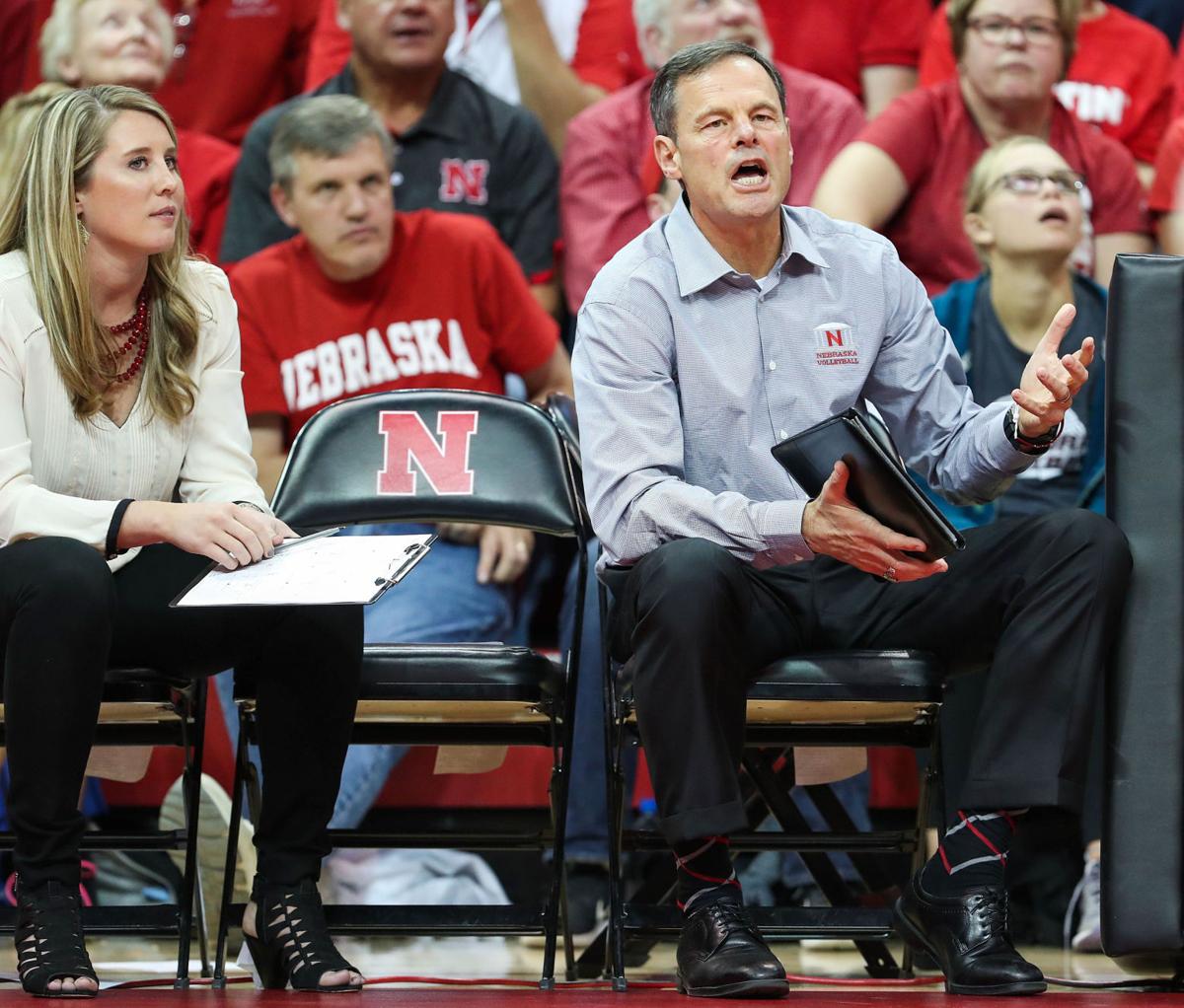
There are loads of volleyball books, but there aren’t a lot of books with a biographical and/or historical perspective in the volleyball literature. That’s one of the motivations for theVolleyball Coaching Wizards project. Dream Like a Champion – Wins, Losses, and Leadership the Nebraska Volleyball Way by Brandon Vogel and John Cook adds to that list. It joins Mike Hebert’s books there, adding much-needed depth.
Try not to be jealous
The first thing you may have to get over while reading this book is jealousy. Nebraska volleyball has access to resources most of us could never dream of having. In some ways, the book is a constant reminder of just how well off that program – and others on their level – really is. I’m sure you can get past that, though. đꙂ
Fourteen chapters, fourteen topics
The book begins with what is essentially a personal biography from Cook. After that, though, each of the chapters has a different theme. They include things like going deeper on player physical development, understanding how to coach the current generation of college athletes, looking at who you work and surround yourself with, and continuing education and development as a coach.
Cook uses stories to make his case on the different subjects throughout the book. I might argue too many in some cases, but it’s not over the top. I’m sure some folks will enjoy them as they focus on elements of volleyball history at Nebraska. I’m not a part of the Husker universe, but I can appreciate Cook’s perspective on the program’s past.
Some real nuggets
A sure sign of a good book is the number of pages or sections you flag throughout the text. I pulled out several along the way myself. Here’s one of the deeper ones where Cook talks about how his coaching mentality changed over time.
“I coached for a long time like that before realizing that it did not have to be that way. I had a choice to make when I walked into the gym every day: I could coach with love or I could coach with anger. I could be in the moment every day and remember why I wanted to do this in the first place. I could marvel at all of the amazing athletes I was getting to work with and really be grateful for the opportunity we get each season to take a group of players, coaches, and staff and try to make our dreams come true.
Click on the link below to read the rest of the article:

Wednesday, May 16, 2018

How to Make Coaching a True Profession


By John O'Sullivan
March 21, 2018
Image result for karch kiraly coach
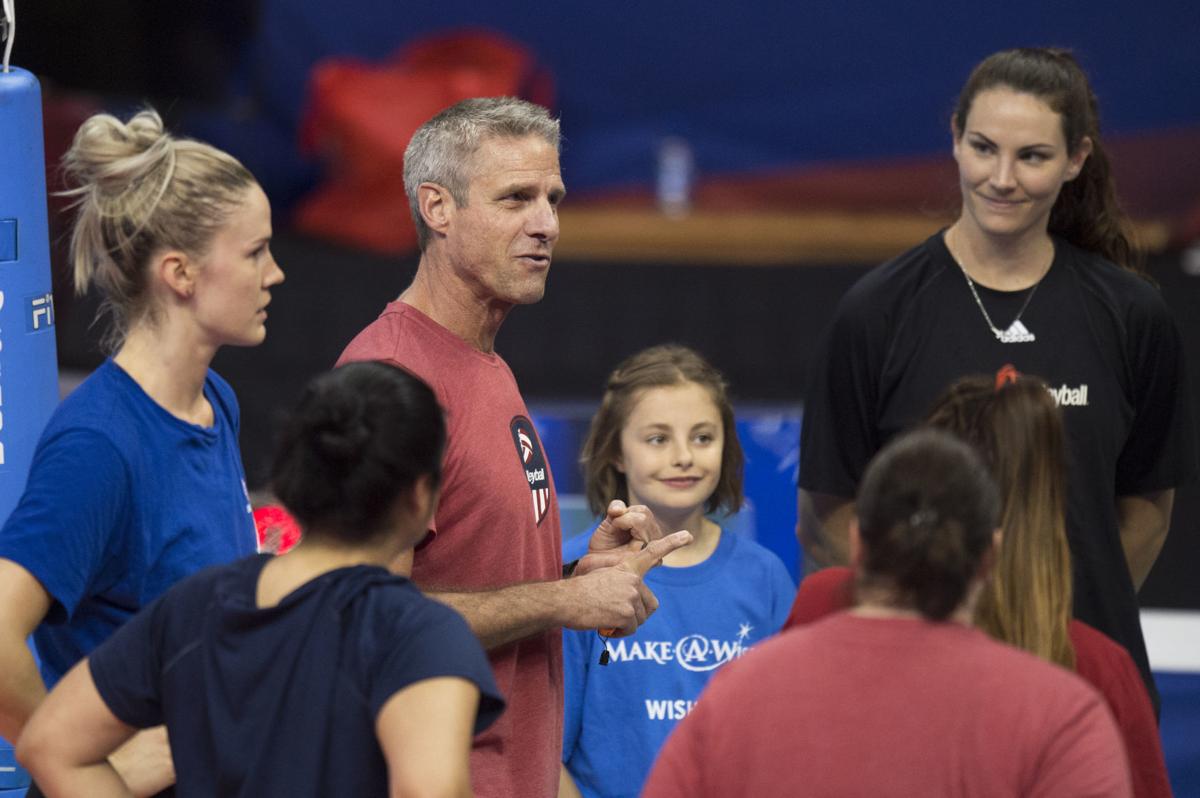
USA volleyball coach Karch Kiraly (center) talks with the team during practice May 14, 2018 at the Devaney Sports Center. (Kayla Wolf/Lincoln Journal Star)
“It ain’t what you know that gets you in trouble. It’s what you know that just ain’t true.” – Mark Twain
“What makes you a professional?”
That was the question Dr. Richard Bailey, Head of Research at the International Council of Sport Science and Physical Education, posed to me and 250 PGA instructors in Orlando this past January at the PGA Youth and Global Summit.
“Does getting paid to do something make you a professional? I don’t think so,” he continued, as he displayed the image above.
“Does belonging to a professional association of coaches or instructors make you a professional?” he asked. “Can’t we do better than that? Don’t we expect more of our professional doctors and lawyers and accountants than to simply be paid for their work or belong to a trade association?”
“No, being a professional is much more. It means seeking a standard of excellence, constantly improving and incorporating the best knowledge and research in your field in order to get better at what you do every single day. That is what it means to be a professional.”
A lot of heads were nodding in the crowd.
“Then we better get to work,” said Bailey, “because when it comes to coaching across the globe, there are far too many coaches who want to be considered professionals in their field, but have no intention of improving themselves or seeking a standard of excellence. They want to be treated like professionals but have no intention of acting like one. This is what we need to change.”
Amen Dr. B! Amen! (click here to listen to our podcast with Dr. B!)
I am a coach. For the past twenty plus years, coaching has been my profession. Yet for far too long, I didn’t act professionally. I got paid. I joined associations. I took my certifications and licenses. But I didn’t look beyond those things. I didn’t seek out more. I blamed my players for not learning, instead of myself for not properly teaching. And then something remarkable happened.
I had my own children. I realized for the first time in my life that there was something more important than myself. I realized the tremendous trust and responsibility that was placed with me by parents who turned over the physical and emotional well-being of their children to me.
I realized I was letting too many of those kids down. It was time for me to become a true professional coach and not simply a coach who got paid. It changed me forever as a coach. It did not make me perfect – far from it – but every day I try and get better. How?
I think about what I missed at practice today.
When players do not learn something, I look first to where I failed as a teacher before I blame the students.
I look for more effective ways to teach.
I try and be a better listener.
I surround myself with coaches who challenge me and critique how I work.
I read books and research on a daily basis.
Do you?
Our goal at the Changing the Game Project is for all coaches to become more professional in our work. That does not mean we all will get paid, but it does mean they get trained and held to a higher standard. Our work is too important.
This article is for those of us who do get paid. This is for coaches who take a paycheck and work with kids and young adults, either on a full-time or part-time basis. Because I look around and I see a lot of non-professionals out there, and you are doing our profession a huge disservice. You are giving us a bad name. You refuse to attend certification or licensing, and never pick up a book or go watch a true master coach at work. Some of you are scaring families and children into accepting everything you say and do, a deity who controls their playing time, their participation, and their future, promising scholarships and “playing at the next level” without even understanding what that means, or caring how many eggs you break in order to find one that does not crack.
We need a higher standard. Parents must demand it. Good coaches must demand it. Athletes must demand it. And administrators must demand it. So what does that standard look like?
When Dr. Jerry Lynch and I work with college teams, we start with two basic questions:
  1.     What are we doing now that we need to KEEP doing if we want to be successful in the future?
  2.     What do we need to STOP doing that we are doing now if we want to be successful in the future?
These questions seem quite appropriate here. What do we need to keep doing, and what do we need to stop doing, if we want coaching to be a profession?
Click on the link below to read the rest of the article.

Friday, May 11, 2018

Rod Brind'Amour's mandate as Canes coach is simple: It's the culture, stupid


By Luke DeCock
May 9, 2018
Related image
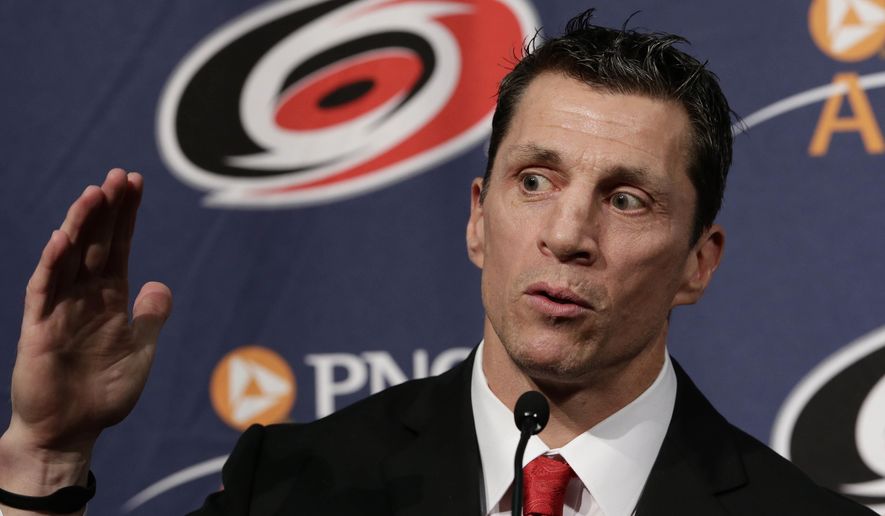
Carolina Hurricanes new head coach Rod Brind’Amour makes remarks during an NHL hockey introductory news conference in Raleigh, N.C., Wednesday, May 9, 2018. . (AP Photo/Gerry Broome)
RALEIGH- At 6 a.m., 14 minutes before sunrise and six hours before the press conference where he was officially introduced as the next head coach of the Carolina Hurricanes, only the fifth person to hold that position in the two decades the team has been in North Carolina, Rod Brind'Amour arrived at PNC Arena for his morning workout. He spent the rest of Wednesday morning watching tape before putting on a black suit, white shirt and red tie and stepping into a job he never thought he wanted while a dozen of his former teammates watched from the back of the room.
That timeline says a lot about Brind'Amour, from the workouts that didn't stop when he stopped playing eight years ago to the work ethic he'll expect his players to match, to the long-delayed and surprising realization that coaching was the only thing that could sate his inner competitive fires the way playing once did, to the respect he commanded from the players he captained.
Tom Dundon saw all this when he bought the team, recognized Brind'Amour as someone who could bring the change he quickly saw the Hurricanes desperately needed. To him, as to many if not all fans, Brind'Amour represented the culture he wanted the franchise to have, just as he did as one of the great NHL captains of his generation.
And if Brind'Amour is the right man for the job, it won't take very long to figure out whether Dundon was right nor not. If this is going to work, if Brind'Amour is going to wring every drop of effort and commitment out of this roster, he won't need much time. There's nothing he can do about goaltending right now, but the rest of it, if he's going to get the most out of this team, it's going to happen right away.
This is about culture, not about Xs and Os. Which isn't to say the latter doesn't matter, but the Hurricanes were actually pretty good at both the Xs and the Os under Bill Peters – look no further than their consistently excellent shot totals, Corsi and other measures of possession. Beyond save percentage, they have been lacking in less quantifiable areas: grit, toughness, hustle, accountability, preparation, commitment and, above all, belief.
“My philosophy is much more about culture and leadership and I felt like we had a sure thing,” Dundon said of Brind'Amour. “For sure, we had someone that does it the right way. If we're going to change the culture here, we've got to have someone leading it. We know what he embodies in life is the culture we want for the team.”
That's why Brind'Amour got the job. And if he's going to get through to this group, scour out the complacency, demand accountability and build confidence, it may take him two months to do it, but it won't take two seasons.
Click on the link below to read the rest of the article:


Read more here: http://www.newsobserver.com/sports/article210771834.html#storylink=cpy

Read more here: http://www.newsobserver.com/sports/article210771834.html#storylink=cpy

Read more here: http://www.newsobserver.com/sports/article210771834.html#storylink=cpy