“Seek opportunities to show you care. The smallest gestures often make the biggest difference.”
John Wooden

Friday, April 12, 2019

7 habits of highly effective volleyball parents


By Jeff Smith
https://www.servecityvolleyball.org/volleyball-blog/2018/2/20/7-habits-of-highly-effective-volleyball-parents
February 2018

volleyball parent and child.jpg

As a volleyball and basketball coach in 1400-plus games over 20 years and as a volleyball and basketball parent for the last eight years, I've seen and experienced the best and worst of sports parenting, from parents applauding great effort by both teams in a match to threatening the referees and getting thrown out of the gym at a game.

Things seem to work out very well for everyone when we each "stick to script" and focus on fulfilling our respective roles:
  • Coaches coach.
  • Parents parent.
  • Players play.
In the first of a three-part series, this week's post offers seven habits that parents can build to be positive influences for their kids and their kids' team.

1. Encourage competing over winning.

It's disappointing watching normally mild-mannered parents become obsessed with their child winning a match or tournament. These parents are missing the big picture. Their daughter or son and the team are not failures if they lose a match. What's important is whether they competed. Did they give their best effort within their current state of emotional, physical and athletic development (which looks very different from a 12-year-old novice player to an 18-year-old veteran player), and does getting beat motivate them to work harder and improve?

Winning is a goal, but it shouldn't be the goal. Development as players, teams and people should be the primary focus. That's where parents can either reflect this message or contradict it.


Click on the link below to read the rest of the article:

https://www.servecityvolleyball.org/volleyball-blog/2018/2/20/7-habits-of-highly-effective-volleyball-parents

Monday, April 1, 2019

Be a Great Teammate


By Brad Stevens
https://leadersanddaughters.com/2019/03/04/brad-stevens-be-a-great-teammate?fbclid=IwAR1PbjmBlE2ftv_Z2PxyGoqxbzzHPkSBSocfpCGE30RnDgq9aodp0VEFXHI
March 2019

Brad Stevens family, wife and kids
Brad and Tracy Stevens with their children Brady and Kinsley  in 2016

Dear Kinsley:

When I was asked to write you a letter for the Leaders and Daughters Event series, I thought of the many different things that I would love say to express what you mean to me, and how excited I am to have a front row seat in your journey through life. After tearing through my first few drafts (which were long rambles), I realized that writing a “life advice” letter to a 9-year old is quite a task. Therefore, I tried to boil my advice down to one of the most important choices anyone can make:

Be a Great Teammate.

You’ll be on many teams throughout your life. Your family is a team. Your theatre group is a team. Your choir is a team. You’ll compete with your soccer teammates, and try to play a harmonious tune with your orchestra. The thoughts below apply to all of these scenarios.

Great teammates always put others first – they are true servants. These qualities come easy for you. You have a genuine compassion for people, and that compassion is contagious. Life won’t be perfect, so there will be times where this will be tested. Take the advice that my mom used to tell me - “you will never regret choosing to be kind.” Great teammates take that high road.

Great teammates raise the energy in the room. They smile a lot. They show gratitude. People know that when they walk in, they have others’ best interest in mind, and want to bring out the best in each and every person. Who doesn’t want to surround themselves with energy raisers?

Great teammates listen and are empathetic. They put themselves in others’ shoes. They are inclusive and bring the group together, rather than judgmental to try to tear the group apart. Their own goals and dreams are important, but those take a backseat to the greater good. Great teammates realize that it’s not about them.

When times are good, be the great teammate that others want to celebrate with. When times are tough, be the great teammate who offers a shoulder to be leaned on. When you get older, you’ll realize that it wasn’t about the good or bad times, it was about who you navigated those times with, the lessons that you learned and the relationships that you forged. We are so thankful to be on your team. You and your brother inspire us every day.

Love, Dad


About Brad Stevens
Brad Stevens is an American basketball coach. He is currently the head coach of the Boston Celtics.

Tuesday, March 19, 2019

Penn State coach Cael Sanderson demands his wrestlers win with ‘gratitude’


By Jerry DiPaola
https://triblive.com/sports/psu-coach-cael-sanderson-demands-his-wrestlers-win-with-gratitude/
March 18, 2019

Cael Sanderson shaking a wrestler level
Cael Sanderson has won seven national championships in his nine seasons as head coach of the Penn State wrestling team (Penn State)

If you’re wondering how Penn State has been able to win seven of the past eight NCAA wrestling championships, coach Cael Sanderson believes he has the answer.
He demands his wrestlers are thankful for who they are, what they’ve been given and the opportunities under their feet every time they step on the mat.
“Gratitude is the foundation for greatness,” said Sanderson, who will bring his nine qualifiers to Pittsburgh for the NCAA wrestling championships Thursday through Saturday at PPG Paints Arena. “Gratitude is the foundation for lasting success in anything that you do. You take that away, the foundation is going to crumble a bit.”
It’s difficult not to pay attention to Sanderson when he talks about how to attain success in collegiate sports. When he wrestled at Iowa State, he was a four-time NCAA champion who never lost a match (159-0). He also won a gold medal at the 2004 Olympics in Athens, Greece.
All that and he seldom got a sip of Gatorade for his efforts.
“I tell (his Penn State wrestlers) all the time, if we got Gatorade in practice when I was in college, that was a big day,” he said. “We were really excited about that. Things have come a long way since then. Student-athletes, they’re not really taught that principle. It’s more of an entitlement at the collegiate athletic level. It’s going more and more in that direction. You see that on a national level.
“These guys just have to be grateful for the opportunity they have because they’re given so much. It’s really a great time to be a student-athlete: the perks that they get and the support that they get.”
Penn State, the defending champion, will be represented in nine of the 10 weight classes.
Three Penn State wrestlers are seeded No. 1: Kittanning’s Jason Nolf (157 pounds); Mark Hall (174); and Bo Nickal (197). Central Catholic’s Vincenzo Joseph (165), Shakur Rasheed (184) and Anthony Cassar (285) are No. 2 seeds.
The others are No. 3 Nick Lee (141), No. 10 seed Roman Bravo-Young (a freshman at 133); and No. 12 Brady Berge (149).
“It’s a weekend of opportunity for us,” Sanderson said. “Our team has wrestled very well this year and set themselves up, but it’s all about the finish, right? And finishing strong and getting what they want.”
There are high expectations for many of the wrestlers, especially seniors Nolf (26-0) and Nickal (25-0), who are two-time NCAA champions and three-time All-Americans.
Sanderson’s expectations for them go beyond what might happen at PPG Paints Arena this weekend.
“I fully expect them to be world title contenders this year,” he said. “If Jason Nolf and Bo Nickal won world championships next fall, I wouldn’t be surprised by that. They are both beyond words and extremely special and guys, in my opinion, who will be remembered for as long as college wrestling exists. Two of the best who have ever stepped on the mat. I believe that.”
Hall (26-0) won the 2017 NCAA championship and this year’s Big Ten title to reach nationals as a No. 1 seed. Joseph (23-1) is a two-time defending NCAA champion, but a Big Ten runner-up this season. He will open defense of his title against No. 31 seed Evan Delong of Clarion.
With so many top-seeded wrestlers, Penn State is among the favorites to win the team championship, but Sanderson had praise for rival programs Iowa, Ohio State, Michigan, Oklahoma State and Cornell.
“There are a lot of great programs,” he said. “The difference is just a few points here and there. It’s not like there’s a huge difference between programs.”
Past success won’t help, he said.
“We have some gamers on our team. The bigger the match, the better the team does. We’ve seen that with these guys. But everything we’ve done is in the past. It’s going to be up to them,” Sanderson said. “We’re excited about the opportunity, and I think we’re going to wrestle really well. Obviously, I’m going to be sitting in the corner, so it’s easy for me to say that.”
Jerry DiPaola is a Tribune-Review staff writer. You can contact Jerry by email atjdipaola@tribweb.com or via Twitter .

Wednesday, February 20, 2019

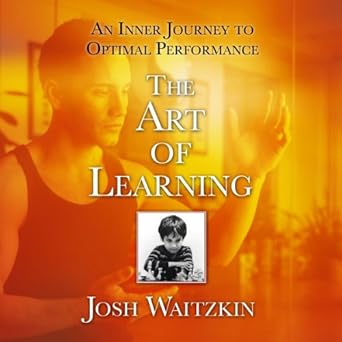
A Review of “The Art of Learning” by Josh Waitzkin


By Art Carden
https://www.lifehack.org/articles/lifehack/a-review-of-the-art-of-learning.html

Image result for josh waitzkin the art of learning


Josh Waitzkin has led a full life as a chess master and international martial arts champion, and as of this writing he isn’t yet 35.  The Art of Learning chronicles his journey from chess prodigy (and the subject of the movie Searching for Bobby Fischer) to world championship Tai Chi Chuan with important lessons identified and explained along the way.  Marketing expert Seth Godin has written and said that one should resolve to change three things as a result of reading a business book; the reader will find many lessons in Waitzkin’s volume.  Waitzkin has a list of principles that appear throughout the book, but it isn’t always clear exactly what the principles are and how they tie together.  This doesn’t really hurt the book’s readability, though, and it is at best a minor inconvenience.  There are many lessons for the educator or leader, and as one who teaches college, was president of the chess club in middle school, and who started studying martial arts about two years ago, I found the book engaging, edifying, and instructive.
Waitzkin’s chess career began among the hustlers of New York’s Washington Square, and he learned how to concentrate among the noise and distractions this brings. This experience taught him the ins and outs of aggressive chess-playing as well as the importance of endurance from the cagey players with whom he interacted.  He was discovered in Washington Square by chess teacher Bruce Pandolfini, who became his first coach and developed him from a prodigious talent into one of the best young players in the world.
The book presents Waitzkin’s life as a study in contrasts; perhaps this is
intentional given Waitzkin’s admitted fascination with eastern philosophy.  Among the most useful lessons concern the aggression of the park chess players and young prodigies who brought their queens into the action early or who set elaborate traps and then pounced on opponents’ mistakes.  These are excellent ways to rapidly dispatch weaker players, but it does not build endurance or skill.  He contrasts these approaches with the attention to detail that leads to genuine mastery over the long run.
According to Waitzkin, an unfortunate reality in chess and martial arts—and
perhaps by extension in education—is that people learn many superficial and sometimes impressive tricks and techniques without developing a subtle, nuanced command of the fundamental principles.  Tricks and traps can impress (or vanquish) the credulous, but they are of limited usefulness against someone who really knows what he or she is doing. Strategies that rely on quick checkmates are likely to falter against players who can deflect attacks and get one into a long middle-game.  Smashing inferior players with four-move checkmates is superficially satisfying, but it does little to better one’s game.
He offers one child as an anecdote who won many games against inferior opposition but who refused to embrace real challenges, settling for a long string of victories over clearly inferior players (pp. 36-37).  This reminds me of advice I got from a friend recently: always try to make sure you’re the dumbest person in the room so that you’re always learning.  Many of us, though, draw our self-worth from being big fish in small ponds.
Waitzkin’s discussions cast chess as an intellectual boxing match, and they are
particularly apt given his discussion of martial arts later in the book.  Those familiar with boxing will remember Muhammad Ali’s strategy against George Foreman in the 1970s: Foreman was a heavy hitter, but he had never been in a long bout before.  Ali won with his “rope-a-dope” strategy, patiently absorbing Foreman’s blows and waiting for Foreman to exhaust himself.  His lesson from chess is apt (p. 34-36) as he discusses promising young players who focused more intensely on winning fast rather than developing their games.
Click on the link below to read the rest of the article:

Friday, January 11, 2019

The Self-Talk Struggle Is Real: How To Win At Work With Sports Psychology


By Amy Rigby
https://blog.trello.com/negative-self-talk?utm_source=newsletter&utm_medium=email&utm_campaign=trello-nov2018_newsletter2
October 19, 2018

Image result for michael jordan last shot


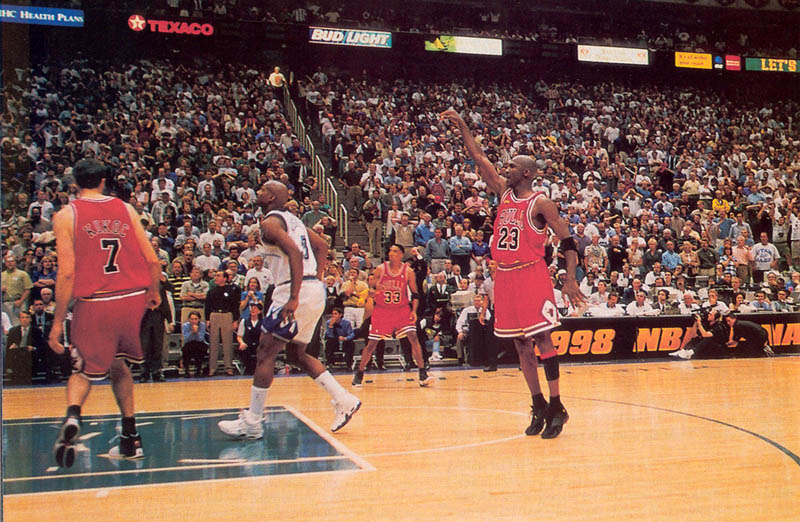
In the 1998 NBA Finals, down by one point and with only 18 seconds left in the game, Michael Jordan tore the ball away from the opponent and made the winning shot of his last game with the Chicago Bulls.
That pivotal moment would go down as one of the greatest in sports history, but the remarkable thing, besides the observable aspect, is what was going on behind the scenes—more specifically, inside Jordan’s mind.
“When I got that rebound, my thoughts were very positive,” Jordan reported later, according to the book The Mindful Athlete by George Mumford, his sports psychologist at the time. Years before that championship game, Jordan and his entire team had been working with Mumford on mastering mindfulness, including harnessing the power of self-talk.
What Is Self-Talk?
Self-talk is anything you say to yourself, whether in your head or out loud. It can consist of positive statements, such as “I can do this” or “I’m going to win,” or negative ones, such as “I always mess up” or “I’m going to fail.”
Self-talk is quite natural, but ignorance of its effects can hinder your performance. Mastering self-talk is already a major part of the sports world. Why do star athletes such as Michael Jordan, Tom Brady, and Tiger Woods work with sports psychologists and mental coaches to train their brains to respond better to stress? Because they know that a huge part of winning the game is mental.
And if an athlete’s inner dialog affects their performance on the court or field, why wouldn’t your self-talk also affect your performance in the office?
How Does Negative Self-Talk Affect You?

1. It can make you feel depressed.

Therapists know that one of the main things to look for in a client who may be depressed is the amount of negative self-talk the patient uses. In fact, nurse Jaclene Zauszniewski developed an eight-item survey for healthcare providers to use to detect when someone is in a downward spiral toward clinical depression. One of the biggest predictors? Excessive negative thinking.

2. It can make you feel anxious.

One study of children 8 to 18 years of age showed that negative thoughts were among the strongest predictors of anxiety. Another study of counselor trainees found that high negative self-talk was correlated with high anxiety levels and that lower negative self-talk was associated with lower anxiety levels and improved performances in video-taped counseling interviews.

3. It can make you lose.

In a tennis study, researchers watched 24 tennis players in tournament matches and recorded their observable self-talk, gestures, and match scores. Afterward, players also reported the thoughts that were going on while they were competing. These researchers found that negative self-talk was associated with losing, and the tennis players who believed positive self-talk was useful scored more points than the players who didn’t think it was useful.
Further, a study of elite wrestlers vying for spots on the Canadian World Wrestling teams found that those who ended up qualifying had fewer negative self-thoughts one hour before competition than those who did not end up qualifying.
So if negative self-talk is so detrimental, is positive self-talk helpful? Let’s see what science has to say.
The Power of Positive Self-Talk
While negative self-talk is linked to depression, anxiety, and losing, positive self-talk, on the other hand, is associated with improvements in your performance and mood. And while it may sound hokey to “talk nicely” to yourself, the supporting evidence from scientific research might have you singing a different tune.

1. It can improve your health.

One study of elementary school children found that positive self-talk was positively related to self-esteem. And a study in Denmark found that heart disease patients with a positive attitude were more likely to be alive five years later, which might be because optimistic patients are more likely to exercise.
If you’re in the habit of constantly telling yourself “I’m incompetent” or “I’m going to get fired,” then feelings of worthlessness are soon to follow, impacting your mental health and your work performance. As you saw earlier, negative self-talk can lead to depression. And in the workplace, depression costs us an estimated $44 billion a year in lost productivity.
Reframing your perspective with self-talk such as “you’re going to get better” and “look how far you’ve come compared to last year” makes for a more optimistic view that might encourage you to seek opportunities to improve.

2. It can boost your performance.

In a review of the literature on self-talk and mental imagery, researchers from Arizona State University proposed that constructive thought management, which includes positive self-talk, can improve employee and organizational performance.
In a water polo study, two experiments tested very specific kinds of self-talk: instructional versus motivational. Experiment one had the participants complete a precision task of throwing the ball at a target, while experiment two had them complete a power task of throwing the ball for distance. Researchers found that when precision was needed, instructional self-talk (“elbow high” and “hand follow the ball”) helped the most. But when power was needed, motivational self-talk (“I can”) worked best.
So if you’re, say, pitching a business idea to potential investors and feel nervous about your performance, telling yourself, “deep breaths” and “remember the talking points you practiced” are instructional self-talk examples that will help you do your best. But if you’re doing a task that doesn’t require much thought and you just need to power through it, such as organizing files or entering data, simply telling yourself “I can do this” should do the trick.

3. It can help you land a job.

study conducted on unemployed managers divided them into two groups: One group received training on monitoring their functional versus dysfunctional self-talk, while the control group received no training. Nine months later, 50 percent of those who had been trained to increase their functional self-talk had found jobs, versus just one percent of the control group.

Bottom line: positive self-talk can help to boost your confidence and give you that extra drive needed to land your dream job.


Click on the link below to read the rest of the article:

https://blog.trello.com/negative-self-talk?utm_source=newsletter&utm_medium=email&utm_campaign=trello-nov2018_newsletter2

Friday, January 4, 2019

2018 READING LIST: 36 (Short) Lessons From 36 Books


By Ben Kissam
December 27, 2018
Image result for books
I've always enjoyed reading but didn’t make it a priority until 2017. Last year, I set a goal to read 12 books (about one per month).
Like my annual “3-Word Memoir“, the point of this post is to shorten each book down to one big takeaway, quote or lesson. This way I can look back years from now and remember where (or from whom) I learned things.
I hope you enjoy and also learn something! And if you use it, follow me on GoodReads.

Ben Kissam’s 2018 Reading List

In 2018, I read 36 books divided up into categories like psychology/mind (7), personal development (7), coaching (3), business (4), science (3), history (1), biography (1),comedy (1), and other (9).
Each book is listed below. At the bottom, you’ll find my top five books for 2018.

Psychology/Mind

Mindset by Carol Dweck- “In short, when people believe in fixed traits, they are always in danger of being measured by a failure.”
When: The Scientific Secrets of Perfect Timing by Daniel Pink- The age that most people run their first marathon at usually ends in a “9” (29, 39, etc.). A reminder that even when we don’t think about it, we’re keeping track of time. Endings to things naturally motivate us to do stuff we wouldn’t normally do.
Drive: The Surprising Truth About What Motivates Us by Daniel Pink- The core of this book is what I’ll remember most–humans are naturally motivated to do good work. When you believe this, motivation becomes more about the environment you cultivate for yourself or others to do their work in.
He: Understanding Masculine Psychology by Robert A. Johnson- Every man suffers from a “Fisher King Wound”. Most men, according to Jungian psychology, spend their lives trying to fix this wound by searching for external remedies to heal it. According to Jung, though, the solution is inside of each man, in the same way that a fish does not need to search for water because it is already in water. We already have what we need.
Two other gems:
  • If one thinks that something or somebody will fill the Grail hunger (read: void) in him, no cost is too high.”
  • “A man creates out of his restlessness; a woman creates by knowing what always was.”
Games People Play by Eric Berne- I created my own crude psychology model for theHaters article from this book. Like Newton’s third law, human behavior has an opposite and equal reaction to the amount of vitriol you hold onto.
Zen Mind, Beginner’s Mind by Shunryu Suzuki- “And we should not hoard knowledge; we should be free from our knowledge. If you collect various pieces of knowledge, as a collection it may be very good, but this is not our way. We should not try to surprise people by our wonderful treasures. We should not be interested in something special. If you want to appreciate something fully, you should forget yourself. You should accept it like lightning flashing in the utter darkness of the sky.”
Example: Rich Froning describes how he got serious about CrossFit when he started serving Christ and stopped doing it for himself. I’ve come across many other examples. It’s interesting how high-performing people almost exclusively drive from a place that exists outside of themselves.
The Inner Game of Tennis by W. Timothy Gallwey- Self 1 and Self 2. Self 1 instructs, Self 2 acts. When we shut off the waterfall of Self 1 and trust in Self 2’s abilities, we become more capable of learning and performing. I’ve read this book three times and take more from it each subsequent time through. If you coach or instruct, I can’t recommend it enough.
Click on the link below to read the rest of the article:

The Mindset of Confidence


By Lindsey Wilson
https://www.positiveperformancetraining.com/blog/the-mindset-of-confidence?fbclid=IwAR3D3R45UC-ftFldpka_YTDkxvvv3ROFcxY3YN3SLAdkbxDDosjA25awy2c

Image result for volleyball madi bugg
Madi Bugg, Stanford

"Confidence is simply that spiritual space where you feel free to focus on only those things you can control.” - Jerry Lynch, The Way of a Champion
When I was a younger athlete, I believed that my accomplishments would lead to confidence.  That if I did this or accomplished that, I’d walk around with confidence all the time. I remember looking at college athletes, and later, Olympic athletes and thinking, “Wow, they must never doubt themselves or get nervous in a game. They must not mess up during a play they’ve done correctly 1,000 times in practice.” I assumed that if you were ‘that good’ or had accomplished ‘that much’ you were past having to struggle with confidence.
But it’s not that way at all.
What I’ve learned from playing with and against some of the best players in the world, and also from being around multiple high-level athletes from several Olympic sports, is that your confidence will always be tested. There will never be a point when you’ll ‘arrive’ and have it all figured out. One of the beautiful things about sports is that you’re constantly going through ups and downs of a season or a game, and every day you have opportunities to choose how to respond to all types of situations, good or bad.
I’ve learned that when you train your brain in a way that helps you cultivate confidence, the challenges you face become really fun, and your successful experiences become even richer.  The cool part is that your brain is a muscle and you can train it like any other muscle in your body – If you want to build confidence, you can do it with intention, repetition, and with a relentless approach, because change is never easy.
In the end, confidence isn’t something that happens to us, it’s something we choose to invest in.
Here are a few ways that have helped me train myself to play with more confidence.
Click on the link below to read the rest of the article: