“Seek opportunities to show you care. The smallest gestures often make the biggest difference.”
John Wooden

Saturday, August 3, 2019

5 Ways self-talk will help you now!

By Courtney Thompson
https://www.positiveperformancetraining.com/blog/5-ways-self-talk-will-help-you-now
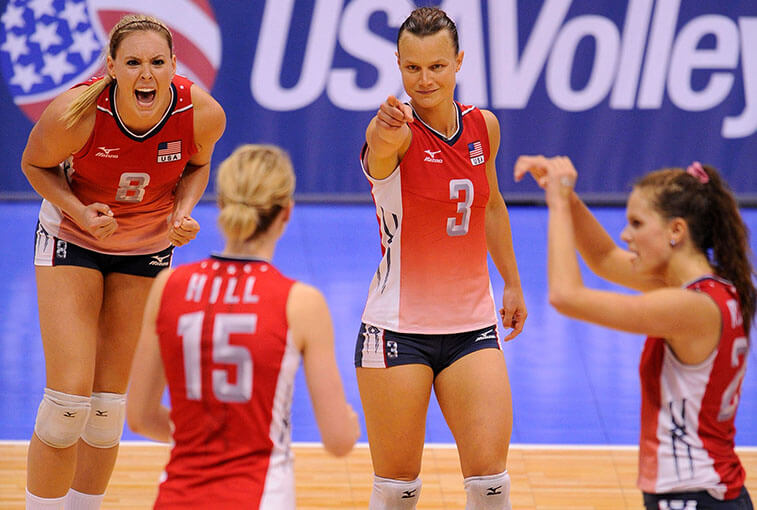
Image result for courtney thompson volleyball


You should exercise unrelenting discipline over your thought patterns.  Cultivate only productive attitudes… You are the product of everything you put into your body and mind.”  -I Ching
In my experience, it’s pretty safe to assume that everyone wants to be confident.  No matter what you are doing: Playing a game, giving a speech, on a date, or taking a test at school, it’s going to be infinity more enjoyable when you feel good about who you are in that moment. In other words, confident in your own skin.
I know from personal experience how painful it is to NOT be truly myself in a given moment. It’s a feeling, in my opinion, significantly worse than losing or failing or any of the things we spend time worrying about.

What I want for you

This is my challenge to the athletes I work with: Fight and work towards being your true self, nothing more and nothing less, in every environment you walk into. You deserve that, but you also have to work for it.
Confidence comes from a few places: Hard work (which I wrote about in 8 reasons no one cares you are tired), and from our inner belief about who we are. One of the most powerful ways to influence our inner belief is by controlling the voice in our head that only we can hear: Our self-talk.
Believe it or not, your brain is a muscle; this means we have to train it like any other muscle in our body: with intention, with repetition, and with a relentless approach, because change is never easy.  I believe (because I’ve experienced it myself) that improving your self-talk will not only take your game to the next level, but make your entire experience of competing significantly more enjoyable.  And most of all, it will allow you to bring your true self in anything you are doing. So with that in mind…
[Tweet ""One of the most poweful ways to influence our inner belief is by controlling the voice in our head" - @CourtLThompson"]

Here are 5 reasons investing in your self-talk is worth it!

1)  You are not your thoughts!

Despite what it feels like at times, you are not your thoughts.  But your thoughts can effect your entire experience if you are not aware and intentional about their direction.  What’s really exciting about this is that this enormous power allows us a great opportunity; with mindfulness and intention we can train our brain to help move towards becoming a better version of ourselves. As one of my sports psychologist (Micheal Gervais) says, the discipline is making a choice to react to a situation in a way that is in line with our values. 
We do that by choosing how we perceive a situation, which comes from what we tell ourselves.  Let me give you an example:
In volleyball, it’s inevitable that at some point an athlete will miss a serve. The player that chooses to respond with positive self-talk such as “I’m loose, aggressive, and I will hit the next one” has a better chance of nailing the next serve than the player that responds with “SHOOT!  I felt terrible in warm ups and now I can’t hit anything, my coach is gonna take me out.”  That player might start making more mistakes, get down on their teammates, have poor body language, stop working hard, or a number of negative reactions that don’t line up with how they really want to behave.
Every day we have opportunities to ‘correct’ our thoughts or choose how to respond to small failures like missing a serve. If we value courage and hard work we can choose thoughts that help us behave with those traits.  This takes a constant effort, but will have limitless positive effects on not only your skills, but how much fun you have while playing.
Click on the link below to read the rest of the article:

Saturday, July 6, 2019

Review: 'How to Raise an Adult' by Julie Lythcott-Haims


By Christine Vandevelde
https://www.chicagotribune.com/entertainment/books/ct-prj-how-to-raise-an-adult-julie-lythcott-haims-20150611-story.html
June 11, 2015

Image result for how to raise an adult


All parents are amateurs. So we turn to the "experts" to answer our questions about vaccinations and sleep schedules and developmental milestones, as well as the more cosmic queries we wrestle with: Will my child be happy? Will my child fit in? Will my child succeed?

More than 50 million copies of Dr. Benjamin Spock's "Baby and Child Care" have been sold since its prescription of pragmatism and Freudian psychology was published in 1946. The search for parenting gurus and guiding hands continued with Penelope Leach, T. Berry Brazelton and John Rosemond. Today, there is parent Heidi Murkoff of the "What to Expect" series, psychologists Madeline Levine and Wendy Mogel, pediatrician and sleep shaman Richard Ferber and teen expert Rosalind Wiseman, author of "Queen Bees and Wannabes."

Julie Lythcott-Haims will likely be the latest to join that canon of parenting guidance, with "How To Raise An Adult: Break Free of the Overparenting Trap And Prepare Your Kid for Success." Drawing on her own experience as a parent and former dean of freshmen at Stanford University, the latest research, and interviews with teachers, employers and Silicon Valley heavyweights, Lythcott-Haims examines the crippling practice of overparenting and its consequences. "Parents protect, direct, and handle so much for children today that we prevent them from the very growth that is essential to their development into adult human beings," she writes.

At Stanford, Lythcott-Haims was known for a mix of expertise and empathy that made her masterful with parents and helpful to students. It was as dean of freshmen she found herself regularly interacting with "students who seemed increasingly reliant upon their parents in ways that felt, simply, off." She understood overinvolved parents were acting out of love. But what those parents might not have understood is the high price paid by their children for that "parenting failure," as Lythcott-Haims calls it. Students who have had all life paths cleared for them are unable to advocate for themselves or cope with setbacks, are more prone to depression, anxiety and drug use (especially "study drugs"), lack simple life skills such as juggling academics and outside activities or managing money, and — more important — have a fear of failure that requires the dangerous strategy of always, always playing it safe.

Like the Harvard-trained lawyer she is, Lythcott-Haims solidly builds the case for how the Blackhawk helicopter parent became the "popular kid we want to follow, or the bully we have trouble standing up to because we fear being harmed, ridiculed, or left out." She thoughtfully examines the cultural shifts and whims that got us to this point: overblown fears of "stranger danger," the self-esteem movement where everybody gets a trophy, the thought contagion of bullying, the relentless competitiveness of a parent class needlessly concerned about leveling the playing field and the overscheduled, checklisted childhood resume that boasts the "right" schools, sports and extracurriculars for the college admission arms race.

Click on the link below to read the rest of the article:
https://www.chicagotribune.com/entertainment/books/ct-prj-how-to-raise-an-adult-julie-lythcott-haims-20150611-story.html

Friday, May 17, 2019

The Rocky Road of Excellence


By John O'Sullivan
February 9, 2016
Related image
“How many of you want to be a college athlete?” I asked this question to 3,000 middle school students in Southern California recently. In all, about 1,000 kids raised their hands.
“What about an artist? A singer? What about a musician?” Maybe 500 students raised their hands.
“What about running a business? Raise your hand if you want to someday own your own business.” 1,500 future entrepreneurs put their hand up.
“How many of you want to go to college?” Almost every hand went up.
“Simple questions, right?” They nod. I continued, “Many people ask themselves ‘what do I want to do in life?’ But I want to let you in on a secret. Many people never end up following their passion, or working in a field they truly love, or achieving excellence in sport or academics. Most people are unfulfilled because they ask themselves the wrong essential question. They ask ‘what do I want to do?’”
“’What do I want to do’ is not very helpful question to ask.” I pause and make eye contact with a few students. “Why? Because it elicits answers such as ‘I want to go to college’ or ‘I want to be a college athlete’ or ‘I want to have a great job.’ But everybody wants those things. That question doesn’t make you any different from the 99%.”
What was I getting at here?
“Elite performers, those who are true professionals at everything they do, ask themselves a far different question. They don’t ask “What do I want?” They ask:
“What am I willing to sacrifice for, to struggle for, and to experience pain and discomfort for? In other words, what dream or passion am I willing to suffer for?”
This question is what leads to excellence in sport, in business, and in life.
The truly elite athlete, the elite musician or top business professional, knows that in order to achieve greatness, you must sacrifice. Most of the young athletes I meet want to play at a high level, but they live in the comfortable world and have no clue what must be sacrificed in order to even have a chance to make it to the top. Most live in a world where they are not challenged, not pushed, and rarely experience struggle. When they do experience adversity, they leave their team, complain to mom and dad, and blame coaches or teachers for making things difficult
They fail to learn life’s most important lesson:
You must risk being uncomfortable to achieve something worthwhile. You must forgo your safety net and go all in if you are truly passionate about pursuing a goal or a dream. You might have to leave your friends and play on a team that provides a better environment. You must be willing to get up and train before school, to arrive early and stay after training, to do more than everyone else, usually when no one is watching.
Cristiano Ronaldo and Lionel Messi left home at age 11 and 12 respectively, in pursuit of an environment that matched their dreams. They train harder than anyone else, not because it makes life easier, but because they want something so badly they are willing to suffer for it.
Click on the link below to read the rest of the article:

Friday, April 12, 2019

7 habits of highly effective volleyball parents


By Jeff Smith
https://www.servecityvolleyball.org/volleyball-blog/2018/2/20/7-habits-of-highly-effective-volleyball-parents
February 2018

volleyball parent and child.jpg

As a volleyball and basketball coach in 1400-plus games over 20 years and as a volleyball and basketball parent for the last eight years, I've seen and experienced the best and worst of sports parenting, from parents applauding great effort by both teams in a match to threatening the referees and getting thrown out of the gym at a game.

Things seem to work out very well for everyone when we each "stick to script" and focus on fulfilling our respective roles:
  • Coaches coach.
  • Parents parent.
  • Players play.
In the first of a three-part series, this week's post offers seven habits that parents can build to be positive influences for their kids and their kids' team.

1. Encourage competing over winning.

It's disappointing watching normally mild-mannered parents become obsessed with their child winning a match or tournament. These parents are missing the big picture. Their daughter or son and the team are not failures if they lose a match. What's important is whether they competed. Did they give their best effort within their current state of emotional, physical and athletic development (which looks very different from a 12-year-old novice player to an 18-year-old veteran player), and does getting beat motivate them to work harder and improve?

Winning is a goal, but it shouldn't be the goal. Development as players, teams and people should be the primary focus. That's where parents can either reflect this message or contradict it.


Click on the link below to read the rest of the article:

https://www.servecityvolleyball.org/volleyball-blog/2018/2/20/7-habits-of-highly-effective-volleyball-parents

Monday, April 1, 2019

Be a Great Teammate


By Brad Stevens
https://leadersanddaughters.com/2019/03/04/brad-stevens-be-a-great-teammate?fbclid=IwAR1PbjmBlE2ftv_Z2PxyGoqxbzzHPkSBSocfpCGE30RnDgq9aodp0VEFXHI
March 2019

Brad Stevens family, wife and kids
Brad and Tracy Stevens with their children Brady and Kinsley  in 2016

Dear Kinsley:

When I was asked to write you a letter for the Leaders and Daughters Event series, I thought of the many different things that I would love say to express what you mean to me, and how excited I am to have a front row seat in your journey through life. After tearing through my first few drafts (which were long rambles), I realized that writing a “life advice” letter to a 9-year old is quite a task. Therefore, I tried to boil my advice down to one of the most important choices anyone can make:

Be a Great Teammate.

You’ll be on many teams throughout your life. Your family is a team. Your theatre group is a team. Your choir is a team. You’ll compete with your soccer teammates, and try to play a harmonious tune with your orchestra. The thoughts below apply to all of these scenarios.

Great teammates always put others first – they are true servants. These qualities come easy for you. You have a genuine compassion for people, and that compassion is contagious. Life won’t be perfect, so there will be times where this will be tested. Take the advice that my mom used to tell me - “you will never regret choosing to be kind.” Great teammates take that high road.

Great teammates raise the energy in the room. They smile a lot. They show gratitude. People know that when they walk in, they have others’ best interest in mind, and want to bring out the best in each and every person. Who doesn’t want to surround themselves with energy raisers?

Great teammates listen and are empathetic. They put themselves in others’ shoes. They are inclusive and bring the group together, rather than judgmental to try to tear the group apart. Their own goals and dreams are important, but those take a backseat to the greater good. Great teammates realize that it’s not about them.

When times are good, be the great teammate that others want to celebrate with. When times are tough, be the great teammate who offers a shoulder to be leaned on. When you get older, you’ll realize that it wasn’t about the good or bad times, it was about who you navigated those times with, the lessons that you learned and the relationships that you forged. We are so thankful to be on your team. You and your brother inspire us every day.

Love, Dad


About Brad Stevens
Brad Stevens is an American basketball coach. He is currently the head coach of the Boston Celtics.

Tuesday, March 19, 2019

Penn State coach Cael Sanderson demands his wrestlers win with ‘gratitude’


By Jerry DiPaola
https://triblive.com/sports/psu-coach-cael-sanderson-demands-his-wrestlers-win-with-gratitude/
March 18, 2019

Cael Sanderson shaking a wrestler level
Cael Sanderson has won seven national championships in his nine seasons as head coach of the Penn State wrestling team (Penn State)

If you’re wondering how Penn State has been able to win seven of the past eight NCAA wrestling championships, coach Cael Sanderson believes he has the answer.
He demands his wrestlers are thankful for who they are, what they’ve been given and the opportunities under their feet every time they step on the mat.
“Gratitude is the foundation for greatness,” said Sanderson, who will bring his nine qualifiers to Pittsburgh for the NCAA wrestling championships Thursday through Saturday at PPG Paints Arena. “Gratitude is the foundation for lasting success in anything that you do. You take that away, the foundation is going to crumble a bit.”
It’s difficult not to pay attention to Sanderson when he talks about how to attain success in collegiate sports. When he wrestled at Iowa State, he was a four-time NCAA champion who never lost a match (159-0). He also won a gold medal at the 2004 Olympics in Athens, Greece.
All that and he seldom got a sip of Gatorade for his efforts.
“I tell (his Penn State wrestlers) all the time, if we got Gatorade in practice when I was in college, that was a big day,” he said. “We were really excited about that. Things have come a long way since then. Student-athletes, they’re not really taught that principle. It’s more of an entitlement at the collegiate athletic level. It’s going more and more in that direction. You see that on a national level.
“These guys just have to be grateful for the opportunity they have because they’re given so much. It’s really a great time to be a student-athlete: the perks that they get and the support that they get.”
Penn State, the defending champion, will be represented in nine of the 10 weight classes.
Three Penn State wrestlers are seeded No. 1: Kittanning’s Jason Nolf (157 pounds); Mark Hall (174); and Bo Nickal (197). Central Catholic’s Vincenzo Joseph (165), Shakur Rasheed (184) and Anthony Cassar (285) are No. 2 seeds.
The others are No. 3 Nick Lee (141), No. 10 seed Roman Bravo-Young (a freshman at 133); and No. 12 Brady Berge (149).
“It’s a weekend of opportunity for us,” Sanderson said. “Our team has wrestled very well this year and set themselves up, but it’s all about the finish, right? And finishing strong and getting what they want.”
There are high expectations for many of the wrestlers, especially seniors Nolf (26-0) and Nickal (25-0), who are two-time NCAA champions and three-time All-Americans.
Sanderson’s expectations for them go beyond what might happen at PPG Paints Arena this weekend.
“I fully expect them to be world title contenders this year,” he said. “If Jason Nolf and Bo Nickal won world championships next fall, I wouldn’t be surprised by that. They are both beyond words and extremely special and guys, in my opinion, who will be remembered for as long as college wrestling exists. Two of the best who have ever stepped on the mat. I believe that.”
Hall (26-0) won the 2017 NCAA championship and this year’s Big Ten title to reach nationals as a No. 1 seed. Joseph (23-1) is a two-time defending NCAA champion, but a Big Ten runner-up this season. He will open defense of his title against No. 31 seed Evan Delong of Clarion.
With so many top-seeded wrestlers, Penn State is among the favorites to win the team championship, but Sanderson had praise for rival programs Iowa, Ohio State, Michigan, Oklahoma State and Cornell.
“There are a lot of great programs,” he said. “The difference is just a few points here and there. It’s not like there’s a huge difference between programs.”
Past success won’t help, he said.
“We have some gamers on our team. The bigger the match, the better the team does. We’ve seen that with these guys. But everything we’ve done is in the past. It’s going to be up to them,” Sanderson said. “We’re excited about the opportunity, and I think we’re going to wrestle really well. Obviously, I’m going to be sitting in the corner, so it’s easy for me to say that.”
Jerry DiPaola is a Tribune-Review staff writer. You can contact Jerry by email atjdipaola@tribweb.com or via Twitter .

Wednesday, February 20, 2019

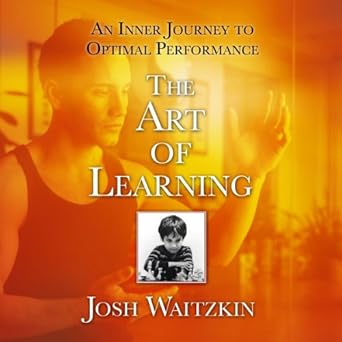
A Review of “The Art of Learning” by Josh Waitzkin


By Art Carden
https://www.lifehack.org/articles/lifehack/a-review-of-the-art-of-learning.html

Image result for josh waitzkin the art of learning


Josh Waitzkin has led a full life as a chess master and international martial arts champion, and as of this writing he isn’t yet 35.  The Art of Learning chronicles his journey from chess prodigy (and the subject of the movie Searching for Bobby Fischer) to world championship Tai Chi Chuan with important lessons identified and explained along the way.  Marketing expert Seth Godin has written and said that one should resolve to change three things as a result of reading a business book; the reader will find many lessons in Waitzkin’s volume.  Waitzkin has a list of principles that appear throughout the book, but it isn’t always clear exactly what the principles are and how they tie together.  This doesn’t really hurt the book’s readability, though, and it is at best a minor inconvenience.  There are many lessons for the educator or leader, and as one who teaches college, was president of the chess club in middle school, and who started studying martial arts about two years ago, I found the book engaging, edifying, and instructive.
Waitzkin’s chess career began among the hustlers of New York’s Washington Square, and he learned how to concentrate among the noise and distractions this brings. This experience taught him the ins and outs of aggressive chess-playing as well as the importance of endurance from the cagey players with whom he interacted.  He was discovered in Washington Square by chess teacher Bruce Pandolfini, who became his first coach and developed him from a prodigious talent into one of the best young players in the world.
The book presents Waitzkin’s life as a study in contrasts; perhaps this is
intentional given Waitzkin’s admitted fascination with eastern philosophy.  Among the most useful lessons concern the aggression of the park chess players and young prodigies who brought their queens into the action early or who set elaborate traps and then pounced on opponents’ mistakes.  These are excellent ways to rapidly dispatch weaker players, but it does not build endurance or skill.  He contrasts these approaches with the attention to detail that leads to genuine mastery over the long run.
According to Waitzkin, an unfortunate reality in chess and martial arts—and
perhaps by extension in education—is that people learn many superficial and sometimes impressive tricks and techniques without developing a subtle, nuanced command of the fundamental principles.  Tricks and traps can impress (or vanquish) the credulous, but they are of limited usefulness against someone who really knows what he or she is doing. Strategies that rely on quick checkmates are likely to falter against players who can deflect attacks and get one into a long middle-game.  Smashing inferior players with four-move checkmates is superficially satisfying, but it does little to better one’s game.
He offers one child as an anecdote who won many games against inferior opposition but who refused to embrace real challenges, settling for a long string of victories over clearly inferior players (pp. 36-37).  This reminds me of advice I got from a friend recently: always try to make sure you’re the dumbest person in the room so that you’re always learning.  Many of us, though, draw our self-worth from being big fish in small ponds.
Waitzkin’s discussions cast chess as an intellectual boxing match, and they are
particularly apt given his discussion of martial arts later in the book.  Those familiar with boxing will remember Muhammad Ali’s strategy against George Foreman in the 1970s: Foreman was a heavy hitter, but he had never been in a long bout before.  Ali won with his “rope-a-dope” strategy, patiently absorbing Foreman’s blows and waiting for Foreman to exhaust himself.  His lesson from chess is apt (p. 34-36) as he discusses promising young players who focused more intensely on winning fast rather than developing their games.
Click on the link below to read the rest of the article: